
Tankless vs Tank Water Heater: The Homeowner’s Guide
Every home relies on a steady, dependable supply of hot water for daily comfort. From washing dishes to enjoying a warm morning shower, your water heater is easily one of the hardest-working appliances in your house. When your old water heating system starts to slow down or fail, you face a major decision: should you stick with a standard tank, or upgrade to a modern tankless model?
Choosing between a tankless vs tank water heater can feel overwhelming. Both options have unique benefits, and the right choice depends on your budget, your household size, and your daily habits. Understanding how these systems differ can help you pick the best solution for your property.
How Different Water Heaters Work
To make the best choice, it helps to understand how tankless water heaters work compared to traditional storage tank water heaters.
The Standard Storage Tank
A traditional tank keeps a large volume of water—usually 40 to 50 gallons—hot and ready at all times. The system uses a steady supply of fuel to constantly reheat the water in the tank so it is ready when you turn on a faucet. Because it holds hot water all day and night, it experiences standby heat loss, which can mean higher energy bills over time.
The Modern Tankless System
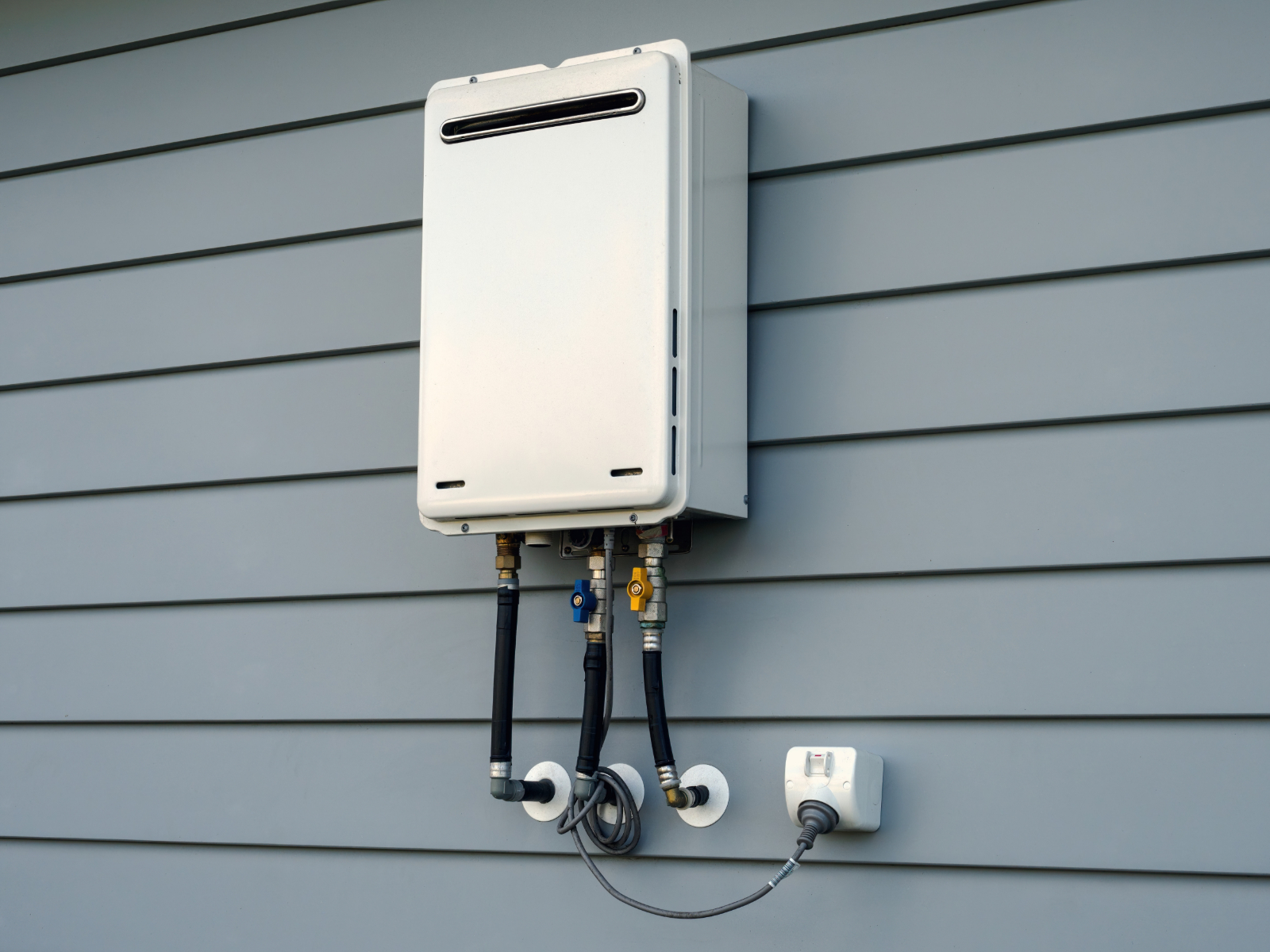
On the flip side, demand water heaters do not keep a storage tank of water. Instead, these compact tankless units use high-powered burners or heating elements to heat water on demand. When you open a hot water tap, cold water travels into the unit, passes through a powerful heat exchanger, and warms up immediately. Because they only heat the water while it is moving through the system, they are exceptionally efficient.
Tankless Water Heater Pros Cons
Every type of water heater comes with trade-offs. Weighing the tankless water heater pros cons can clarify which model fits your home’s daily routine.
The Benefits of Tankless Systems
- Endless Hot Water: Since they heat water on demand, you will never run out of warm water during back-to-back showers.
- Superior Energy Efficiency: These systems achieve high energy efficiency ratings because they do not waste power keeping a giant tank warm when nobody is home. This can lower your monthly energy cost.
- Space Savings: Tankless models are small and mount directly to the wall, freeing up valuable floor space in your garage, basement, or utility closet.
The Drawbacks to Consider
- Upfront Price: The initial cost of a tankless unit and its installation is higher than a traditional tank.
- Installation Needs: Upgrading to a tankless unit can require adjustments to your home’s infrastructure, such as resizing your gas lines or updating your electrical panel to handle the sudden power load.
Choosing the Best Option for Your Home
If you are asking yourself, “should i get a tankless water heater?” you need to consider your household’s size and total water usage. Large families that frequently run the washing machine, dishwasher, and multiple showers at the same time need a system that can handle that heavy demand.
Tank vs Tankless: Scannable Comparison Table
| Feature | Traditional Storage Tank | Tankless On-Demand Unit |
| Upfront Cost | Lower initial investment | Higher initial investment |
| Energy Efficiency | Standard efficiency; higher standby loss | Maximum efficiency; lowest operating cost |
| Hot Water Supply | Limited to tank size (can run out) | Continuous and endless supply |
| Space Required | Requires a large footprint on the floor | Compact and wall-mounted |
| Expected Lifespan | 10 to 15 Years | Over 20 years with regular care |
Long-Term Lifespan and Local Rebates
When comparing a tank vs tankless setup, look closely at the long-term value. While traditional water heaters are more affordable to install upfront, they typically need to be replaced every 10 to 15 years. A high-quality tankless water heater can last for over 20 years with regular maintenance, making it an excellent investment for your property.
Additionally, installing an energy-efficient on demand water heater portland families choose can make you eligible for great incentives. The Energy Trust of Oregon frequently offers cash-back rebates for qualifying high-efficiency upgrades, helping to lower the initial installation cost.
Tankless vs. Traditional Water Heater Frequently Asked Questions (FAQ)
Can a tankless system run out of hot water?
No. Because they lack a limited storage tank and heat water continuously as it flows, they provide an endless stream of warmth. You can run back-to-back showers without ever running out.
Is it hard to switch from a tank to a tankless water heater?
The swap requires a professional touch. A technician must adjust your water lines, install a proper ventilation system, and sometimes upgrade your gas lines to ensure the new unit receives enough fuel to heat water instantly.
Do tankless water heaters need regular maintenance?
Yes. To protect your investment and ensure it lasts for decades, a tankless unit should be flushed once a year. This clear maintenance process removes mineral scale that can gather on the heating elements.
How do Energy Trust of Oregon rebates help with costs?
When you install an approved, high-efficiency system, you can submit a simple application to receive cash back. This program helps local homeowners choose green, energy-saving upgrades.
Which option is better for an investment or rental property?
Standard tanks are often chosen for rental properties due to their lower upfront price. However, if you plan to stay in your home for the long term, a tankless unit saves more money on utilities over time.
Find Your Perfect Water Heater Solution
Selecting the right water heater requires a clear look at your home’s layout, utility connections, and your family’s daily needs. Getting a professional, on-site evaluation ensures you receive a precise recommendation and an accurate price quote before any work begins.
If you are looking for an experienced, clean, and trusted team to handle your water heater repair or upgrade, contact Meticulous Plumbing today. Our family-owned business specializes in residential water systems, providing the permanent solutions and professional care your Portland home deserves.