

A new kitchen faucet is one of the easiest upgrades you can make to your home, and most of the time, replacing one is a quick, simple job. Occasionally, though, the plumbing hidden under the sink turns a simple replacement into a larger project. Understanding the difference ahead of time helps you plan your budget and choose the right faucet.
We’re Meticulous Plumbing, a family-owned plumbing company in Portland, OR, and here’s how to tell which kind of job you’re probably facing before you call anyone.
How Long Does a Kitchen Faucet Installation Take?
When everything under the sink is in good condition, a professional plumber can usually install a new kitchen faucet in an hour or two. That includes turning the water off, removing the old faucet, cleaning the sink surface, mounting and connecting the new faucet, and carefully checking every connection for leaks.
The installation takes longer when the shutoff valves need replacing, the old faucet is corroded in place, or the new faucet doesn’t match the holes in your sink.
What Makes a Faucet Replacement Simple?
A straightforward kitchen faucet installation usually has four things working in its favor:
- Reliable shutoff valves. These small handles under the sink control the hot and cold water supply to the faucet, and newer quarter-turn valves close quickly and completely.
- Flexible supply lines. Braided stainless steel lines are easy to connect, disconnect, and replace.
- Matching holes. Your new faucet needs the same number of holes your sink or countertop already has, or fewer.
- Accessible space. A clear, uncluttered area under the sink makes the installation faster and cleaner.
Sign #1: Old or Corroded Shutoff Valves
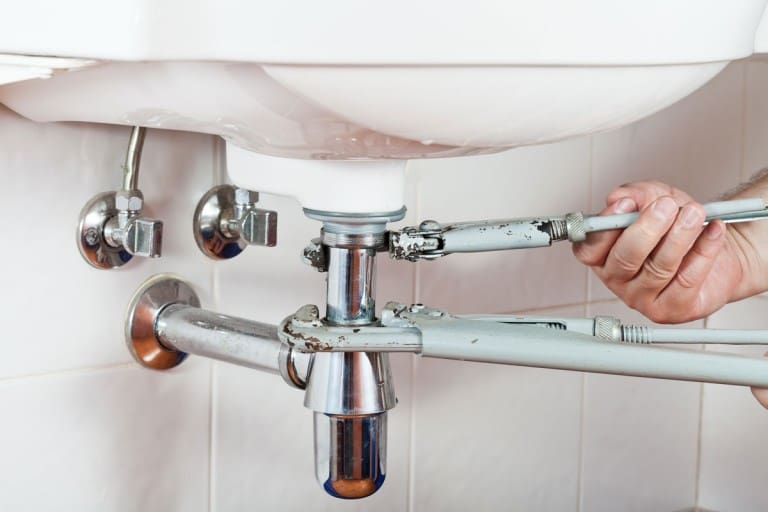 Shutoff valves are the most common reason a faucet replacement grows into a bigger job. Older valves typically have round handles that require several turns, and after years without use, they can seize, drip, or fail to stop the water completely.
You can test yours by turning the water off at each valve under the sink and then opening the faucet. If a handle won’t move, leaks around the stem, or still allows water through, the valve should be replaced before the new faucet is installed. Replacing it during the same visit saves you a second appointment.
Sign #2: Your Sink Holes Don’t Match the New Faucet
Before purchasing a new faucet, look under the sink and count the holes. Most kitchen sinks have one, three, or four, and the extra holes usually hold separate hot and cold handles, a side sprayer, or a soap dispenser.
If your new faucet needs fewer holes than you have, a deck plate can cover the extras for a clean, finished appearance. If it needs more holes than you have, the faucet probably isn’t compatible with your sink, and the simplest solution is choosing a model that fits your existing setup.
Sign #3: Switching From Deck-Mount to Wall-Mount
Most kitchen faucets are deck-mounted, meaning they sit directly on the sink or countertop, while a wall-mounted faucet comes out of the wall above the sink. Switching from one style to the other isn’t a simple replacement, because the water supply lines have to be relocated inside the wall to reach the new faucet.
Since that work changes the pipes inside the wall, it usually requires a plumbing permit. It’s a different type of project with a different price, and we’ll always explain that before any work begins.
What Affects Kitchen Faucet Installation Cost?
The cost of a kitchen faucet installation depends mostly on how much work the job requires beyond the basic replacement. The biggest factors are whether the shutoff valves or supply lines need replacing, how difficult the old faucet is to remove, whether the new faucet matches your sink holes, and whether you’re changing the faucet’s location or mounting style.
If you purchase the faucet yourself, keep in mind that our warranty doesn’t cover parts the customer provides. New faucets we supply and install come with a 2-year warranty.
When a New Faucet Leads to a Bigger Conversation
Sometimes a faucet replacement is the first step toward something larger. If you’re also considering a new sink, relocating the sink, or remodeling the kitchen, it makes sense to plan the plumbing together, and we can help you decide what’s worth doing now and what can wait.
How Meticulous Plumbing Handles Your Installation
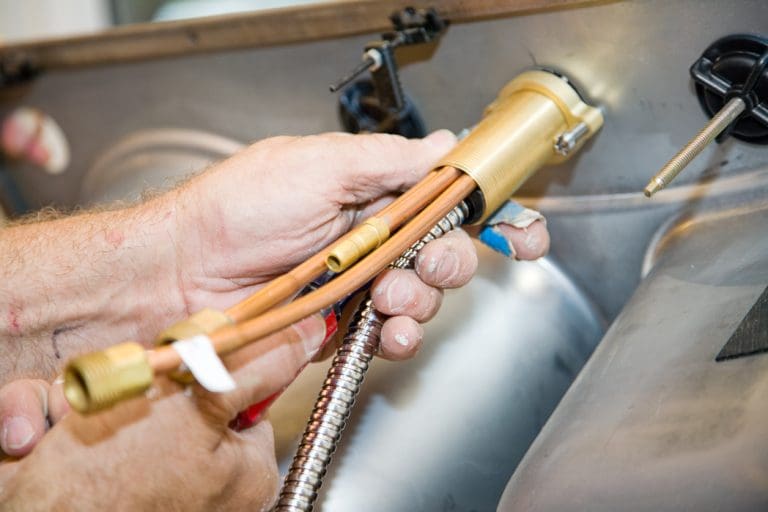 Before we install a kitchen faucet, we inspect the shutoff valves, supply lines, and drain, so you know about potential problems before they become expensive surprises. We’ll explain everything in plain language, give you clear options, and offer a whole-house plumbing inspection while we’re there. We also arrive on time, wear uniforms and shoe covers, clean up thoroughly afterward, and recycle your old faucet and parts.
Frequently Asked Questions About Kitchen Faucet Installation
Can I install a kitchen faucet myself?
Many handy homeowners can, especially when the valves and supply lines are in good condition. If your valves are old or stuck, or you’re unsure about any connection, it’s worth calling a licensed plumber.
Do I need a permit to replace a kitchen faucet in Oregon?
Usually not for a simple replacement in the same location. Oregon’s state rules don’t require a permit to replace a faucet that isn’t concealed in a wall, but relocating pipes inside the wall usually does.
Should I replace my shutoff valves at the same time?
If they’re old, stiff, or leaking, yes, because it’s much easier to replace them while the faucet is already disconnected.
Why is my new faucet leaking at the base?
A leak at the base of the faucet usually means a loose mounting nut or a seal that didn’t seat properly. It’s often a quick repair, but don’t ignore it, since slow drips can damage the area under the sink.
Why did my water pressure drop after installation?
Small pieces of debris often loosen during installation and clog the aerator, the small screen at the tip of the faucet, and cleaning it usually solves the problem.
Whether it’s a quick replacement or a larger project, Meticulous Plumbing will tell you honestly what your kitchen faucet installation needs before any work begins. Reach out to schedule a visit.